
At the core of this evolution is the move toward replacing rigid hardware with flexible, programmable architectures. These models enable rapid provisioning, centralized control, and seamless scalability, allowing IT teams to respond to business needs without costly reconfiguration.
Automation and AI are now essential, not optional. Intelligent systems handle routine tasks like configuration and traffic optimization, while predictive analytics and anomaly detection improve reliability and reduce downtime. This shift empowers IT teams to focus on strategic initiatives rather than reacting to problems.
Security frameworks such as Zero Trust are becoming standard, especially in hybrid and remote work environments. These models enforce continuous verification and microsegmentation, protecting networks from increasingly sophisticated threats.
Finally, the rise of edge computing and IoT demands networks that deliver low-latency performance and real-time analytics. Organizations are investing in high-bandwidth connectivity and AI-driven monitoring to support decentralized workloads and ensure resilience at scale.





The Ultimate Guide to Building a Future-Ready Business Network
How to Design a Secure, Scalable Network for the Future of Work
For IT, procurement, and operational leaders, the network infrastructure services that underpin their organization are now the backbone of business operations. They enable collaboration across hybrid teams, connect customers to digital services, and support the flow of data across applications and devices. Yet as organizations expand their cloud technology use and device ecosystems, networks are under more pressure than ever.That pressure shows up in multiple ways. Hybrid work requires secure, seamless access from anywhere. Cloud workloads demand scalable, high-performance connectivity. The rapid growth of devices, from laptops to IoT sensors, introduces new management and security challenges. In fact, the number of connected IoT devices globally is expected to reach ~40 billion by 2030, growing from about 18.8 billion in 2024.
This guide explores practical strategies to design and modernize business networks that can support today’s requirements while preparing for what comes next.

The Shifting Demands on Business Networks
The way organizations operate has changed dramatically, and networks must evolve to keep up. New dynamics in work models, application delivery, and device use are creating pressures on infrastructure that traditional approaches can no longer handle.Hybrid Work Is Here to Stay
Work is no longer tied to a single location. Employees expect to connect securely and collaborate seamlessly from home, the office, or on the go. Legacy VPN solutions often introduce latency and bottlenecks, frustrating users and straining IT.
Education illustrates this challenge well. On a high school campus, hundreds of students may connect their own devices during peak class times. Reliable Wi-Fi and scalable bandwidth are critical to keep digital learning platforms running. Budget constraints mean IT teams often stretch limited resources, making modern frameworks that simplify management and improve performance especially valuable.
Cloud Workloads Change Traffic Patterns
The shift to SaaS and cloud workloads has transformed network traffic. According to Gartner, worldwide end-user spending on public cloud services is forecast to reach $723.4 billion in 2025, up from $595.7 billion in 2024, a growth rate of 21.5%. Applications that once lived in data centers now reside in public and private clouds, meaning more data flows across the Internet instead of internal networks. Direct-to-cloud connectivity, often delivered through SD-WAN, helps maintain application performance while keeping costs predictable.
For government agencies, this shift comes with added complexity. Many run legacy applications alongside cloud services while handling sensitive citizen data. Strict data sovereignty rules dictate where information can reside, and agencies are frequent cyber targets. Adopting Zero Trust and centralized oversight helps balance modernization with compliance and security requirements.
The Device Explosion
The variety of connected devices continues to expand. Beyond laptops and smartphones, many organizations now depend on IoT sensors in factories, connected medical equipment in hospitals, and smart classroom technologies in education. Each new device adds complexity and potential vulnerabilities. Networks must provide visibility into all endpoints, authenticate devices reliably, and segment traffic to contain risk.
Healthcare makes the stakes clear. Hospitals rely on medical devices, electronic health records, and telemedicine platforms that all require constant connectivity. Downtime is more than an inconvenience—it can affect patient care. Compliance with HIPAA adds further urgency, making segmentation and strong endpoint management essential safeguards.
Core Principles of a Future-ready Network
Designing for the future requires a shift in mindset. Instead of incremental upgrades, organizations need to anchor their networks in principles that ensure long-term scalability and protection.- Scalability
Growth in users, workloads, and devices is constant. A scalable network absorbs this pressure without requiring a complete redesign. Modular infrastructure, software-defined networking, and cloud-native approaches allow organizations to expand on demand. For example, SD-WAN can quickly extend secure connectivity to new branches or remote sites, supporting growth without heavy reinvestment. - Security by Design
Security must be embedded from the start, not bolted on later. A Zero Trust framework, where every user, device, and application is continuously verified, helps organizations manage evolving threats. Segmentation limits the reach of breaches, while encryption and identity controls provide additional layers of protection. - Performance and Reliability
Latency and downtime do not just frustrate users. They can halt manufacturing lines, disrupt virtual classrooms, or affect patient care. Building for reliability means incorporating redundancy and deploying monitoring tools that deliver real-time visibility. Proactive management allows IT teams to address issues before they disrupt operations. - Centralized Management
As environments expand across offices, clouds, and remote locations, management complexity can quickly grow. Centralized platforms simplify oversight by providing a single dashboard for monitoring, policy enforcement, and updates.
Practical Steps to Network Modernization
Modernizing a business network can feel daunting but breaking it into stages makes the process manageable. Here is where to start:- Assess current state: Inventory devices, workloads, and security controls. Identify bottlenecks, aging equipment, and areas of overspend. Use tools like Connection’s network assessment and design services to gain clarity on existing architecture and performance baselines.
- Prioritize workloads: Not all applications are equal. Mission-critical tools such as collaboration platforms, patient care systems, or financial applications require the highest performance and security.
- Plan for hybrid and remote work: Ensure secure, seamless access across distributed teams. Modern frameworks like SASE or ZTNA offer stronger protection and better user experiences than legacy VPNs. Planning should also account for the mix of on-premises and cloud-based applications employees depend on every day. Connection’s Azure managed services can help organizations simplify hybrid and multicloud management, ensuring workloads are secure and accessible without adding unnecessary complexity.
- Layer in automation: Use zero-touch provisioning for fast device deployment, centralized patching for consistency, and automated monitoring to detect issues early.
- Invest in security: Embed Zero Trust, endpoint protection, and AI-driven threat detection to reduce risk and meet compliance requirements. Leveraging managed and monitored security services can help cover detection, response, and compliance in regulated environments effectively.
Technologies That Enable Future-ready Networks
Modern challenges require modern tools. Several technologies are proving essential to building networks that scale securely:- SD-WAN: Routes traffic intelligently across broadband, LTE/5G, and MPLS, improving performance and reducing reliance on costly dedicated circuits.
- Cloud-native Networking: Provides elastic scalability and secure access for applications hosted in AWS, Azure, or Google Cloud.
- Wi-Fi 6E and Beyond: Wi-Fi 6E expands wireless capacity into the 6 GHz band, reducing congestion in environments like hospitals, schools, and offices. With Wi-Fi 7 (IEEE 802.11be) arriving commercially in 2025, organizations can expect even faster speeds, improved reliability, and better support for dense device environments. These wireless advancements ensure networks remain ready for future demands.
- Network Security Platforms: Next-generation firewalls, intrusion detection, and AI-driven analytics provide layered defenses. Secure access service edge (SASE) unifies networking and security into a cloud-based service.
- Unified Endpoint Management (UEM): Offers centralized visibility and control over laptops, mobile devices, and IoT endpoints, ensuring consistent security across environments.
Build with Partners
With so many technologies and vendors to evaluate, modernization can feel overwhelming. IT teams face resource constraints, and procurement leaders often juggle overlapping contracts and budget pressures. The question becomes: how do you simplify this complexity?Trusted partners can help. They bring cross-industry expertise, access to a broad vendor ecosystem, and the ability to align technology with business goals. Whether it is ensuring compliance for a healthcare provider, optimizing collaboration for a hybrid workforce, or reducing costs through vendor consolidation, partners help organizations focus on outcomes rather than integration headaches.
Equally important, partners provide ongoing support—from monitoring platforms to lifecycle management—so networks remain secure and up to date. Partnership is less about outsourcing and more about enablement. It gives your organization the knowledge and resources needed to thrive.
The Way Forward
Business networks are no longer static infrastructure. They are dynamic systems that determine whether organizations can stay resilient, agile, and secure in the face of rapid change.Grounding strategy in core principles, modernizing step by step, and adopting the right mix of technologies ensures networks can meet today’s needs while preparing for tomorrow’s. Across industries, the priorities are consistent: networks must be flexible, security-first, and designed for growth.
For more insights, visit Connection’s Network Infrastructure Services and Cloud Technology hubs to explore resources tailored to your needs.
Network Security Solutions

SASE and Zero Trust
SASE and Zero Trust are complementary frameworks for modern secure networking. SASE delivers cloud-based security and connectivity, while Zero Trust enforces identity-based access. Together, they simplify operations, strengthen defenses, and enable secure, flexible access for distributed workforces and multicloud environments.Top 5 Tips for Choosing a Next-generation Firewall (NGFW)
Firewall Selection for Modern Threats
Strengthen your network with Cisco’s expert guidance. Learn five essential criteria for selecting an NGFW that delivers advanced threat prevention, deep visibility, flexible deployment, and seamless integration.

Seven Major Challenges Facing Today’s Hybrid Networks
Hybrid Security Simplified
Fortinet reveals key security challenges in hybrid environments and how hybrid mesh firewalls offer unified protection and simplified management for evolving networks.11 Cool Things Your Firewall Should Do
Maximize Security, Control, and Visibility
Explore SonicWall’s guide to next-generation firewall capabilities. Learn how deep packet inspection, application control, bandwidth management, and real-time threat prevention help IT teams block ransomware, prevent data leaks, and optimize network performance for hybrid and cloud environments.

Aruba ClearPass Network Access Control
Automated Zero Trust Access
Secure every device and user with Zero Trust access. Aruba ClearPass automates authentication and policy enforcement for wired, wireless, IoT, and BYOD, integrating with your security ecosystem for complete visibility and compliance.Cisco Security and Threat Detection
End-to-end Defense for Users and Data
Explore Cisco’s approach to endpoint protection and threat analytics, then see how bundled security suites deliver end-to-end defense for users, cloud, and breach response.- Threat Landscape: Explore endpoint protection and threat analytics for a holistic security strategy.
- Integrated Solutions: See how Cisco’s security suites deliver complete protection for users, cloud, and breach response.

Network Management and Automation
The Business Value of AIOps-driven Network Management
AI-driven Network Optimization
Juniper shows how AI-powered automation boosts efficiency, security, and resilience. Discover strategies for evaluating AIOps and achieving better outcomes with intelligent detection and remediation.

Cisco Meraki: Managing Hybrid Work Environments
Simplify network management with Meraki’s cloud platform. Enable secure, automated connectivity and real-time visibility for hybrid workforces, all from a single dashboard.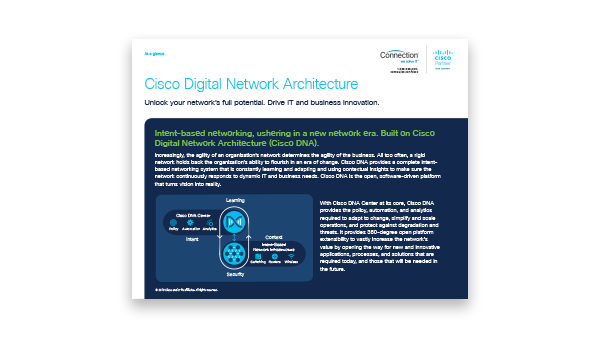
Centralized Automation for Enterprise Networks
Centralize network control and automate operations with Cisco DNA. Unlock scalable performance, proactive assurance, and future-ready security for enterprise networks.
Automated Segmentation and Policy
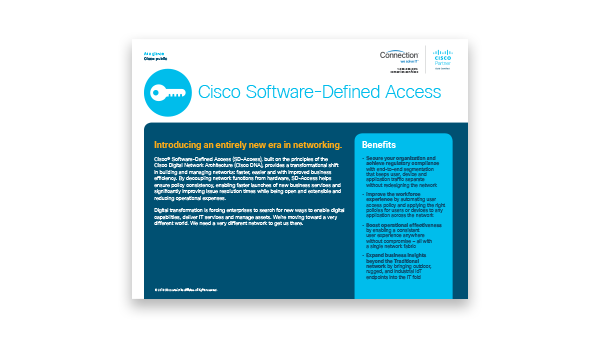
Automate segmentation and policy enforcement for campus and branch networks. Cisco SD-Access streamlines onboarding and compliance with software-defined management.
Validating Network Change Management with Cisco Modeling Labs
Reduce risk and downtime by simulating network changes before deployment. Cisco Modeling Labs helps IT teams test, troubleshoot, and optimize upgrades with virtual emulation.

Cisco Nexus 9000 Series Switches
Upgrade to high-performance switching for data centers. Nexus 9000 delivers automation, speed, and scalability with programmable architectures for modern workloads.Network AI and Automation
AIOps for Networks leverages AI and machine learning to drive intelligent network automation. It streamlines operations by analyzing telemetry, predicting issues, and executing automated remediation. This approach reduces manual intervention, accelerates troubleshooting, and enables adaptive, self-healing networks—delivering higher efficiency, reliability, and security across complex, distributed infrastructures.
Network Technology Resources

Cloud Networking and NaaS
Cloud networking and Network as a Service (NaaS) redefine enterprise connectivity by shifting from hardware-based infrastructure to software-driven, cloud-managed platforms. These models deliver virtualized routing, automated orchestration, and integrated security frameworks like SASE and Zero Trust. Organizations gain scalable bandwidth, centralized visibility, and predictable costs while supporting hybrid and multi-cloud environments. Emerging technologies such as AI-driven automation and edge computing further enhance performance, resilience, and adaptability across modern network architectures.Intel Network Speed and Cabling Guide
Optimize Connectivity for Scalable Performance
Discover how to choose the right Ethernet speeds and cabling for your business. This Intel® guide covers upgrade paths, migration strategies, and infrastructure planning to help IT teams maximize bandwidth, minimize bottlenecks, and future-proof network performance for hybrid and cloud environments.

Cisco+ Secure Connect: Unified SASE and Secure Access Solutions
Simplify VPN and secure access for remote users and branches with Cisco’s cloud-managed Secure Connect portfolio.- Meraki Overview: Discover how Cisco+ Secure Connect (Meraki) delivers unified SASE, seamless connectivity, and automated security for hybrid workforces and branch offices.
- Technical Data Sheet: Dive into deployment options, feature breakdowns, and package details to help IT teams evaluate integration and scalability.
SonicWall Secure SD-Branch
Integrated SD-WAN and Branch Security
Transform branch connectivity with integrated SD-WAN, routing, and security. SonicWall SD-Branch offers zero-touch deployment, centralized management, and real-time threat protection for distributed environments.
Connection Community

5 Questions Every IT Leader Should Ask...
A network refresh is one of the most significant investments an IT leader will make in any budget cycle. Done... Read More

It’s Time to Break Up with Your VPN
VPNs Were Great, for a Time. But it’s Time to Put Yourself Back Out There. There comes a time when... Read More

Top Trends in Manufacturing Factory...
The manufacturing industry is undergoing a practical transformation—driven by the necessity for improved efficiency, enhanced security, and a future-ready infrastructure.... Read More

Three Technology Upgrades Retailers Should...
It feels like so much has changed in the past six months. The supply chain is broken, both for your... Read More

Cellular and Wireless Backhaul Support...
In manufacturing, we have long focused on the concept of always-on operations to keep critical processes and production online. More... Read More
